SEN Support vs EHCP: Which Does Your Child Need?
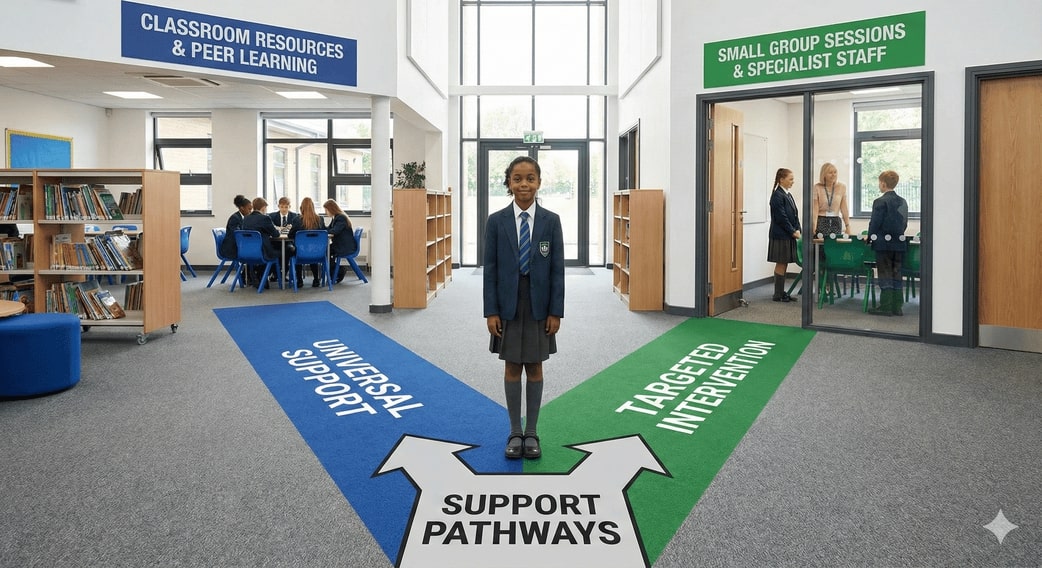
“Does my child need SEN Support or an EHCP?” This is one of the most common questions parents ask when they recognize their child is struggling in school. Understanding the difference between these two levels of support–and knowing which is right for your child–can feel confusing, especially when schools and local authorities use different terminology.
This guide will demystify SEN Support and EHCPs, explain when each applies, and help you recognize when it’s time to move from one level to another. By the end, you’ll understand exactly where your child fits in the UK’s SEN framework and what steps to take next.
Track your child’s progress through SEN Support
Whether your child has SEN Support or an EHCP, tracking interventions and outcomes is essential. Tediverse helps you monitor progress and build evidence for next steps.
✓ Free plan available • ✓ No credit card needed • ✓ Upgrade any time
Understanding the UK SEN Framework
The UK’s special educational needs system operates on a graduated approach. Think of it as a pyramid:
The SEN Pyramid:
- Universal Provision (Bottom Layer): Quality first teaching available to all children. Good teaching that meets diverse needs through differentiation.
- SEN Support (Middle Layer): Additional, targeted support for children whose needs cannot be met through universal provision alone. Provided by the school.
- EHCP (Top Layer): A legal plan for children with complex, significant needs requiring support beyond what SEN Support can provide. Involves local authority coordination.
Most children with special educational needs receive SEN Support rather than an EHCP; around 4.8% of pupils in England have an EHCP (2024). But these percentages don’t tell you whether your individual child needs one–their specific needs do.
What is SEN Support?
SEN Support is the first level of additional support beyond quality first teaching. It’s managed and funded by the school, not the local authority.
Key Features of SEN Support
SEN Support Characteristics:
- School-led: The SENCO and teachers design and deliver interventions using the school’s resources
- Assess, Plan, Do, Review cycle: Regular monitoring and adjustment of support (the graduated approach)
- SEN Support Plan: A written plan outlining needs, interventions, and outcomes (format varies by school)
- Parental involvement: You should be consulted about your child’s support and progress
- Not legally binding: Unlike an EHCP, SEN Support doesn’t have legal force
- Flexible: Can be adjusted quickly as needs change
- On the SEN Register: Your child will be recorded on the school’s SEN register
Examples of SEN Support
Typical SEN Support Interventions:
- Small group literacy or numeracy interventions (e.g., reading recovery, precision teaching)
- Social skills groups or emotional regulation support
- In-class support from teaching assistants for specific activities
- Differentiated work and modified expectations
- Use of assistive technology (e.g., word processors, colored overlays)
- Sensory breaks or access to a quiet space
- Visual timetables, now-and-next boards, task lists
- Modified homework or assessment arrangements
- Regular check-ins with a key adult
What is an EHCP?
An Education, Health and Care Plan (EHCP) is a legal document for children and young people aged 0-25 with more complex needs that cannot be met through SEN Support alone.
Key Features of an EHCP
EHCP Characteristics:
- Legally binding: Schools and LAs must provide the support specified in the plan
- Local authority involvement: The LA coordinates and often funds provision
- Multi-agency: Brings together education, health, and social care support
- Detailed assessment: Involves professional reports from educational psychologists, therapists, medical professionals
- Specific provision: Section F must detail exactly what support will be provided, by whom, and how often
- Named school: Section I names the specific school that will meet the child’s needs
- Annual review: Must be reviewed every year by law
- Appeals rights: Parents can appeal to SEND tribunal if they disagree with decisions
Examples of EHCP Provision
Typical EHCP Provision Might Include:
- 1:1 teaching assistant support for specific hours per week
- Specialist teaching (e.g., from a qualified teacher of the deaf, VI specialist)
- Regular therapy delivered by qualified professionals (speech and language therapy, occupational therapy, physiotherapy)
- Access to specialist equipment or facilities
- Modified curriculum or alternative educational pathways
- Placement in a specialist resource base or special school
- Integrated health support (e.g., epilepsy management, continence care)
- Social care provision (e.g., short breaks, direct payments)
Build evidence for EHCP applications
If you’re considering requesting an EHCP, you’ll need strong evidence. Tediverse helps you document interventions tried, progress made, and ongoing needs–building a compelling case.
The Key Differences at a Glance
| Aspect | SEN Support | EHCP |
|---|---|---|
| Who manages it | School | Local authority + school |
| Legal status | Not legally binding | Legally binding |
| Funding | From school budget | Often LA high needs funding |
| Assessment | School-based assessment | Statutory assessment by LA |
| Reviews | Regular (termly typical) | Annual (legally required) |
| Appeals | No formal appeal rights | Can appeal to SEND tribunal |
| Provision detail | General strategies | Specific, quantified support |
When Does a Child Need SEN Support?
A child should be placed on SEN Support when quality first teaching and universal strategies are not sufficient to help them make adequate progress.
Signs Your Child Might Need SEN Support:
- Consistently working below age-related expectations despite good teaching
- Making significantly slower progress than peers from similar starting points
- Showing signs of difficulty with learning, communication, behavior, or emotional wellbeing
- Has a diagnosed condition that impacts learning (e.g., dyslexia, ADHD, autism)
- Needs targeted interventions beyond what’s available to all children
- Teacher raising concerns about your child keeping up with the curriculum
If you suspect your child needs SEN Support but the school hasn’t identified them, request a meeting with the class teacher and SENCO to discuss your concerns. Schools must consider parental requests seriously.
When Does a Child Need an EHCP?
An EHCP is for children whose needs are more complex and cannot be met through the school’s existing resources and SEN Support. The SEND Code of Practice states that an EHCP should be considered when:
Indicators an EHCP May Be Needed:
- Lack of progress: Despite two or more cycles of SEN Support intervention, your child is not making adequate progress
- Complexity: Your child has significant, complex needs across multiple areas (e.g., learning, communication, sensory, physical, social/emotional)
- Specialist support required: Your child needs specialist teaching, therapy, or equipment that the school cannot provide from their budget
- Multi-agency coordination: Your child needs support from education, health, and/or social care that must be coordinated
- Specialist placement: Your child may need a specialist resource base or special school
- Long-term needs: Needs are likely to continue into post-16 education or beyond
The “Two Cycles” Rule of Thumb
While not a hard legal requirement, the education sector often references “two cycles” of SEN Support intervention before considering an EHCP. A cycle typically means:
- Assess: Identify the child’s needs through observation, assessment, and consultation
- Plan: Design targeted interventions to address those needs
- Do: Implement the interventions for a period (typically one term)
- Review: Evaluate whether the interventions have led to progress
If after two such cycles your child has not made adequate progress despite appropriate interventions, this suggests SEN Support alone isn’t sufficient, and an EHCP request may be justified.
How to Request an EHCP Assessment
Parents have the legal right to request an EHC needs assessment directly from their local authority. The school can also make this request, but you don’t need to wait for them.
Steps to Request an EHCP Assessment:
- Gather evidence: Collect school reports, professional assessments, examples of SEN Support tried, and your own observations
- Write to your LA: Submit a formal letter requesting an EHC needs assessment, explaining why you believe SEN Support is insufficient
- Include supporting documents: Attach all evidence demonstrating your child’s needs and lack of progress
- LA decision: The LA has 6 weeks to decide whether to assess. They must tell you their decision and provide reasons
- If refused: You can pursue mediation and/or appeal to the SEND Tribunal
For detailed guidance on the EHCP application process, read our comprehensive guide: EHCP Application Process: A Step-by-Step Guide.
Make informed decisions about your child’s support
Whether pursuing SEN Support or an EHCP, having organized evidence and clear progress tracking helps you advocate effectively. Tediverse provides the tools you need.
✓ Progress tracking • ✓ Evidence gathering • ✓ Intervention monitoring
Common Misconceptions
Myth 1: “You must try SEN Support first before getting an EHCP”
Reality: While the graduated approach usually means starting with SEN Support, there’s no legal requirement to spend a specific amount of time on SEN Support before requesting an EHCP. If a child’s needs are clearly complex and significant from the start, you can request assessment immediately.
Myth 2: “Only children in special schools have EHCPs”
Reality: Many children with EHCPs attend mainstream schools. The EHCP ensures they get the support they need in whichever appropriate setting that is–mainstream, resourced provision, or special school.
Myth 3: “EHCPs are only for severe learning disabilities”
Reality: EHCPs cover all types of special educational needs–learning difficulties, autism, ADHD, sensory impairments, physical disabilities, speech and language needs, and more. It’s about complexity and the need for coordinated support, not severity alone.
Myth 4: “SEN Support means my child will be labeled”
Reality: SEN Support is a framework for getting your child the help they need. It’s not a negative label–it’s a recognition that every child learns differently and some need additional strategies to thrive.
Making the Right Choice for Your Child
Ultimately, whether your child needs SEN Support or an EHCP depends on their individual circumstances. Here’s a decision framework to help you:
Decision Framework:
Your child likely needs SEN Support if:
- Needs are specific and can be addressed through school-based interventions
- They’re making some progress with targeted support
- No specialist equipment or therapy is required
- School has the expertise and resources to meet their needs
Your child likely needs an EHCP if:
- Progress remains inadequate despite well-delivered SEN Support
- Needs are complex, significant, and affect multiple areas
- Specialist teaching, therapy, or resources are required
- Multi-agency coordination is necessary
- Current provision is unsustainable without additional funding/support
- You need legal protection to ensure consistent support
Don’t be afraid to trust your instincts as a parent. If you believe SEN Support isn’t enough, you have the right to request an EHCP assessment–and if the LA refuses, you can appeal.
Final Thoughts: It’s About Meeting Needs, Not Labels
Whether your child has SEN Support, an EHCP, or neither, what matters most is that their needs are being met and they’re making progress–academically, socially, and emotionally.
SEN Support and EHCPs are tools to ensure children get the right support. They’re not about labels or limitations–they’re about unlocking potential and creating the conditions for every child to thrive.
If you’re unsure which path is right for your child, start by talking to the school’s SENCO, gathering evidence of your child’s needs and progress, and advocating for what you believe they require. And remember: you know your child best.
Ready to advocate effectively for your child’s needs?
Whether navigating SEN Support or pursuing an EHCP, Tediverse helps you track progress, gather evidence, and make informed decisions. Join UK families advocating with confidence.
✓ Free plan available • ✓ No credit card needed • ✓ Upgrade any time