United Front Co-Parenting: Supporting Neurodivergent Children Across Households
“Your mom doesn’t do it that way.”
“At Dad’s house, we have different rules.”
“Why can’t it be the same here?”
These are conversations that divorced or separated parents often have with their children. For a neurodivergent child, these inconsistencies between households can be more than just confusing–they can be a source of intense anxiety and stress. A child who thrives on routine, predictability, and consistent boundaries can become emotionally dysregulated when navigating two different worlds.
Co-parenting a neurodivergent child requires a new level of communication, collaboration, and compassion. It’s about more than just sharing custody; it’s about forming a “united front” to provide the stability your child needs to thrive. This article is a guide to helping you and your co-parent work together, even if your relationship is strained. We’ll explore the unique challenges of co-parenting a neurodivergent child, celebrate the incredible power of consistency, and provide actionable strategies to ensure your child feels secure and supported in both of their homes. We’ll also show you how Tediverse can be a powerful tool for bridging the gap between households.
Struggling with co-parenting consistency?
Join UK families using Tediverse to support their neurodivergent children across households. Keep routines, appointments and notes in one place, so the same information is there whichever home your child is in.
✓ Free plan available • ✓ No credit card needed • ✓ Upgrade any time
The Challenge of Two Worlds: The Need for Consistency
The need for routine and predictability is a central aspect of many neurodivergent experiences. A consistent daily schedule, clear expectations, and a predictable sensory environment help a child feel safe and regulated. When this consistency is broken, it can be deeply distressing.
Emotional Dysregulation
A child who is constantly adapting to different rules, routines, and expectations between two households can experience heightened anxiety. This emotional strain can lead to an increase in meltdowns, emotional outbursts, or withdrawal. The child may feel like they are never truly “home” and are always trying to figure out the rules of their current environment.
Executive Function Overload
Navigating two sets of rules–two different bedtimes, two different rules for screen time, two different mealtime routines–places a huge cognitive burden on a child with executive function challenges. It requires them to constantly switch between two different operating systems, which can lead to exhaustion and a lack of emotional reserves. Our guide on Supporting Executive Function Skills provides a deeper understanding of this.
Sensory and Physical Needs
The sensory environment of one home might be a safe sanctuary, while the other is a source of anxiety. A child might have their favourite fidget toys at one home, but not the other. Their bedroom at one parent’s house might be a sensory-friendly home, while at the other, it is cluttered and overstimulating. We discuss this in our blog post, More Than Fidgeting: Understanding Sensory Needs in Neurodivergent Children. This inconsistency can make it difficult for a child to self-regulate.
Communication and Advocacy
The parents themselves may have different levels of understanding or different approaches to advocating for their child. One parent might be actively using Social Stories to teach a new social skill, while the other is not. One parent might be on top of all the documentation for a Complete EHCP Guide, while the other is not. This can create a significant gap in care and support.
Track and coordinate care across households
Use Tediverse’s specialized tracking tools to share information, coordinate routines, and ensure consistency between both homes.
Proactive Strategies: Building a United Front
A united front doesn’t mean you and your co-parent have to agree on everything or even be friends. It means you must agree on the core aspects of your child’s well-being and communicate consistently about them.
1. Prioritize a Shared Communication System
The most important step is to create a secure, consistent way to share information, free from the emotional baggage of your past relationship.
A Dedicated Digital Hub
Use a platform like Tediverse to share information. This provides a neutral space to track a child’s progress, log appointments, and share notes about their day. This avoids the back-and-forth of text messages or emails that can lead to misunderstandings.
The Weekly Check-In
Schedule a brief, weekly phone call or video chat to discuss the week ahead. The sole focus of this conversation should be the child. Use an agenda and stick to it: “This week, let’s talk about therapy appointments and his new visual schedule.”
The “One-Voice” Rule
Agree that no matter how much you disagree behind closed doors, you will present a “united front” to your child. If one parent says, “No TV before homework,” the other must support that rule, even if they don’t agree with it.
2. Align on Core Routines and Boundaries
The goal isn’t to make both households identical, but to align on the core routines that provide stability and predictability.
The Bedtime Routine
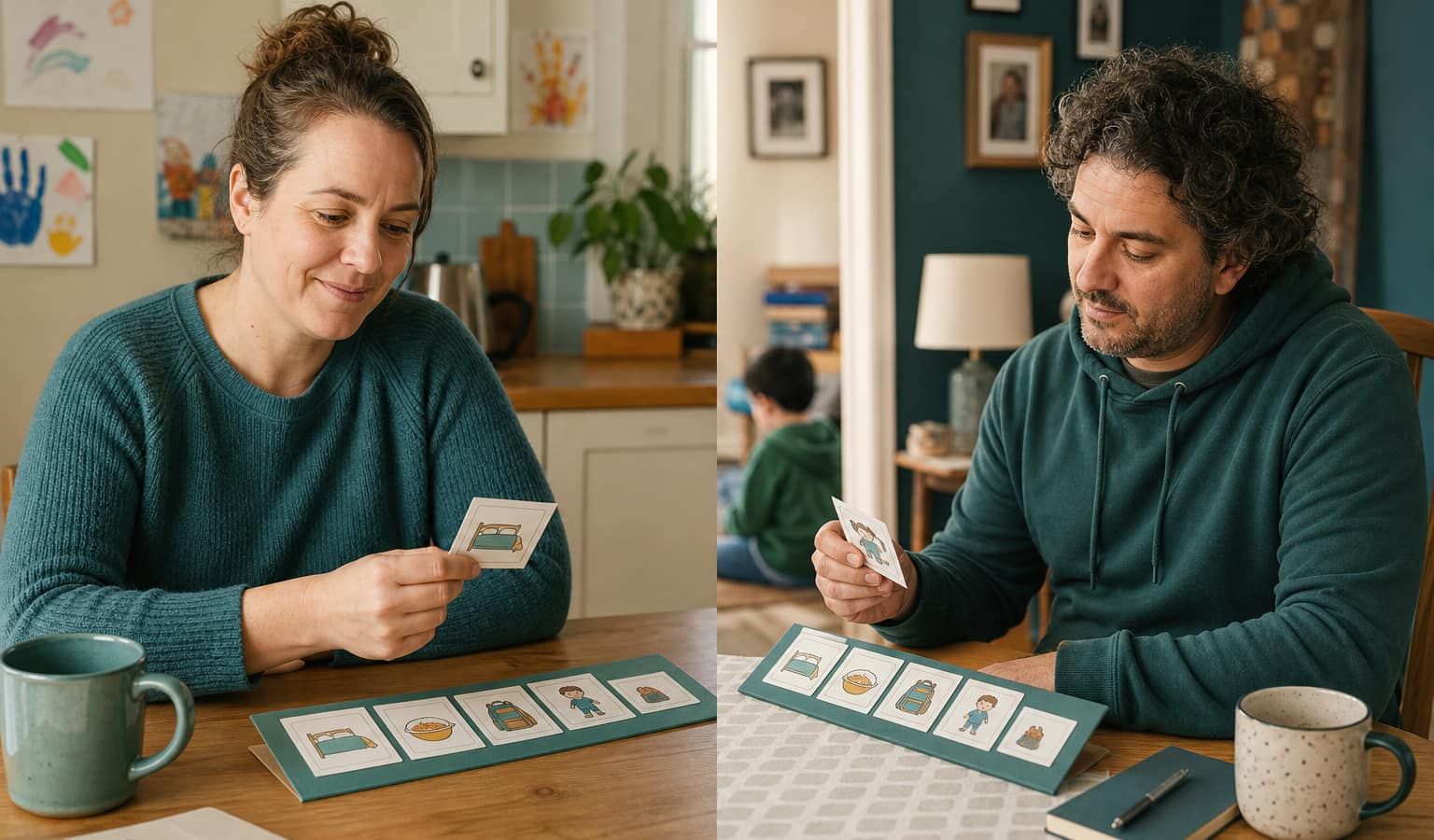
A consistent bedtime routine is one of the most important things you can do. Agree on the basic steps of the routine (e.g., bath, book, lights out) and the target bedtime. Use a Visual Schedule that is identical in both households to help the child understand the routine.
The “Same-as-Home” Box
Create a box of favourite sensory toys, blankets, or books that travels with the child between homes. This provides a sense of continuity and comfort.
Consistent Language
Agree on a common language for addressing a child’s behaviours and needs. For example, if you are both using Social Stories to teach a new skill, agree on the key phrases and vocabulary.
3. Share the Emotional and Administrative Load
Co-parenting a neurodivergent child often means one person carries a disproportionate amount of the mental load. Acknowledging this and sharing it is an act of love for your child and for each other.
Divide the Work
Use a shared digital to-do list to divide the administrative tasks, such as scheduling appointments with therapists or filling out the paperwork for a DLA claim.
Support Each Other as Advocates
You are your child’s fiercest advocate. Support your co-parent in their role as an advocate by sharing resources, attending meetings together, or providing notes and documentation. Our guide on Advocating for Your Child at School provides a clear roadmap for this.
Celebrate Each Other’s Wins
Acknowledge your co-parent’s successes. “I saw on the app that you had a great conversation with the school,” or “Thank you for taking him to that appointment.” This builds trust and encourages collaboration.
Ready to build a united front for your child?
Join UK families using Tediverse to explore new approaches to co-parenting, with evidence-based strategies and practical tracking tools.
✓ Free plan available • ✓ No credit card needed • ✓ Upgrade any time
How Tediverse Can Help
The journey of co-parenting a neurodivergent child is challenging, but it is made infinitely easier with the right tools. Tediverse can be the bridge that connects two households, providing a single, consistent hub for information and collaboration. Our platform helps you:
Tediverse Co-Parenting Support Features
- Keep One Source of Truth: Log routines, appointments, notes and successful strategies in one organised place, so the same information is there for both parents–and anyone else supporting your child–whoever needs it.
- Build Predictability: The Scheduler and Visual Schedule features can be used to create a predictable routine that reduces anxiety for all members of the family.
- Reduce the Mental Load: Our platform reduces the emotional and administrative burden on both parents, freeing up your energy to focus on the needs of your children and on your own well-being, which is crucial for your ability to parent. Our blog on Burnout Prevention: Self-Care Tips for SEN Parents in the UK can help with this.
Conclusion: From Two Worlds to One United Front
Co-parenting a neurodivergent child is a testament to the power of a united front. By prioritising consistency, communication, and compassion, you can ensure that your child feels safe, secure, and deeply loved, no matter which home they are in.
The journey from two separate worlds to one united front is not linear, and there will be challenges along the way. But with consistent support, understanding, and the right tools, you can develop the communication skills and emotional resilience to navigate these challenges together.
Remember, every co-parenting situation is unique. What works for one family may need adaptation for another. The key is to remain patient, compassionate, and committed to helping your child see that both of their homes are safe, predictable, and filled with love.
Ready to discover a calmer, more organized approach to parenting?
Join UK families using Tediverse to support their neurodivergent children across households. Start free today and discover the difference understanding makes.
✓ Free plan available • ✓ No credit card needed • ✓ Upgrade any time