Supporting Executive Function Skills: Complete Guide for Parents
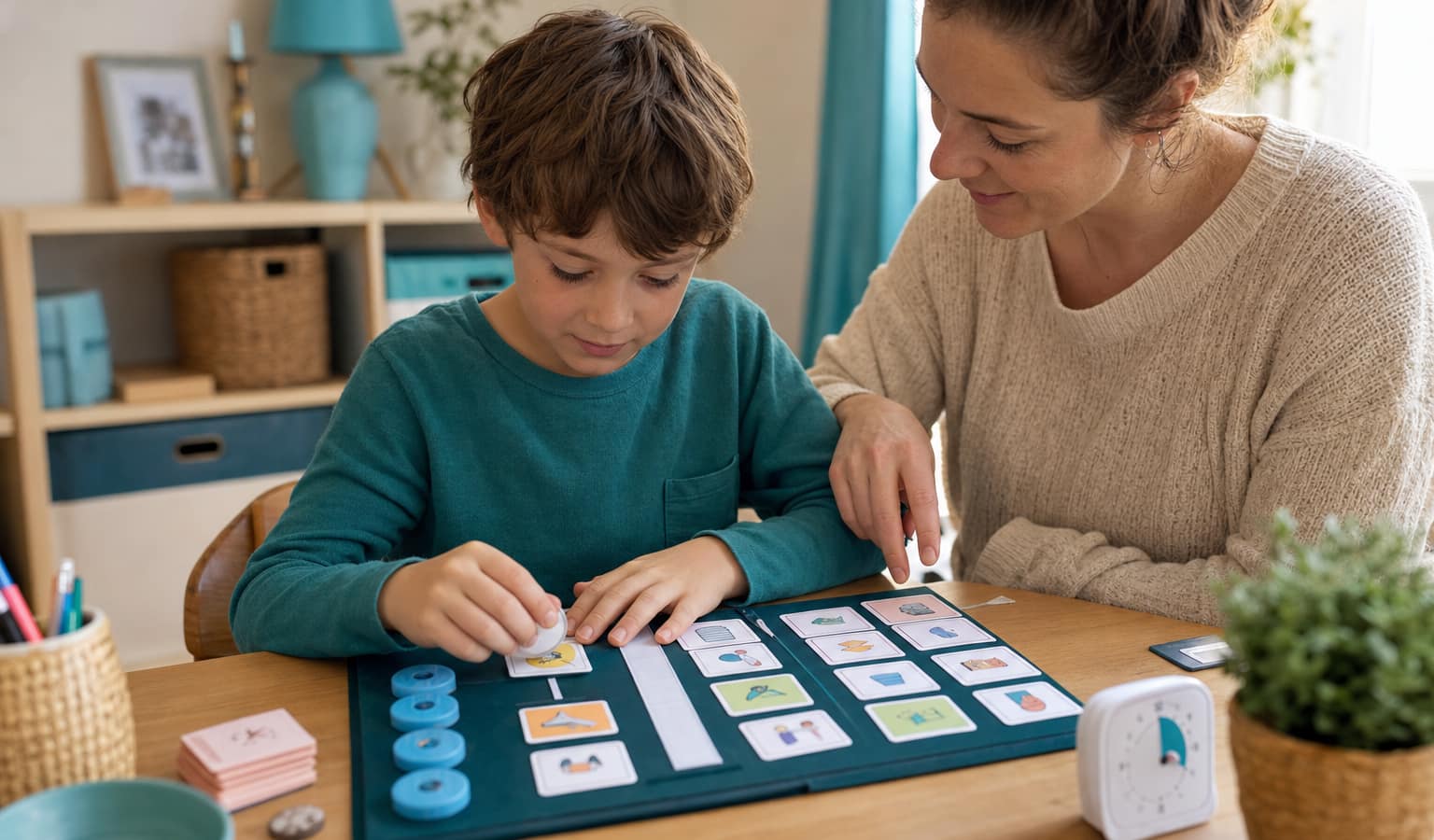
“Executive function skills are like the air traffic control system of the brain - they help us manage ourselves, our tasks, and our goals efficiently.”
Executive function (EF) refers to the mental processes that enable us to plan, focus attention, remember instructions, juggle multiple tasks, and self-regulate. For many neurodivergent children in the UK, including those with autism, ADHD, or specific learning difficulties (SpLDs), these skills can develop differently and take longer to build.
Support your child’s executive function skills with Tediverse
Tediverse helps you build visual routines, track which strategies actually work, and gather evidence over time to share with your child’s school and professionals.
✓ Free plan available • ✓ No credit card needed • ✓ Upgrade any time
Understanding Executive Function in Neurodivergent Children
The Three Core Executive Function Skills
- Working Memory: The ability to hold information in mind and use it for learning and completing tasks.
- Cognitive Flexibility: The capacity to switch between thinking about different concepts or to think about multiple concepts simultaneously.
- Inhibitory Control: The ability to inhibit or control impulses and inappropriate behaviour.
Executive function differences are very common among autistic children and can affect many areas of daily life. Children with ADHD often find these skills harder too, as a core part of how their brains are wired.
Signs of Executive Function Challenges in School-Age Children:
- Difficulty starting or completing tasks
- Trouble with time management and meeting deadlines
- Challenges transitioning between activities
- Problems with organisation of materials
- Difficulty following multi-step instructions
- Struggles with emotional regulation
- Forgetfulness despite adequate intelligence
Executive Function in the UK Educational Framework
Within the UK’s educational system, executive function challenges are often addressed through SEN Support or, for children with more significant needs, an Education, Health and Care Plan (EHCP).
SEN Code of Practice
The SEND Code of Practice (2015) recognises that children with neurodevelopmental conditions may require support with “cognition and learning” and “social, emotional and mental health,” which can include executive function skills.
The graduated approach of “Assess, Plan, Do, Review” provides a framework for supporting executive function development through targeted interventions and accommodations.
Working with Your SENCO
The Special Educational Needs Coordinator (SENCO) at your child’s school is a vital ally in supporting executive function skills. They can help develop appropriate targets for your child’s SEN Support Plan or contribute to the “cognition and learning” section of an EHCP.
Access Arrangements
For older students facing exams, executive function challenges may qualify them for access arrangements such as extra time, rest breaks, or a reader/scribe. These are coordinated through the Joint Council for Qualifications (JCQ) guidelines.
Key UK Educational Terms Related to Executive Function Support:
- SENCO: Special Educational Needs Coordinator
- SEN Support Plan: The plan a school uses to record the extra help a child receives at SEN Support level
- EHCP: Education, Health and Care Plan
- Educational Psychologist: Professional who can assess cognitive skills including executive function
- Provision Map: Document outlining support strategies and interventions for a pupil
- Reasonable Adjustments: Changes made to accommodate a disability under the Equality Act 2010
Practical Strategies for Supporting Executive Function at Home
Visual Supports and Prompts
Visual timetables, checklists, and reminder cards can significantly reduce the working memory load for children with executive function challenges.
- Morning and evening routine charts with pictures
- Visual checklists for schoolbag packing
- Colour-coded folders for different subjects
- Post-it note reminders in strategic locations
Time Management Tools
Many neurodivergent children struggle with time perception. Making time visible and concrete can help them develop better time management skills.
- Visual timers (like Time Timers) that show time elapsing
- Breaking tasks into timed chunks with breaks
- Creating routines linked to specific times
- Using alarms or timers for transitions
Organisation Systems
- Labelled storage for toys and school materials
- Homework station with all necessary supplies
- Wall planners for weekly and monthly activities
- “One in, one out” rule for managing possessions
Emotional Regulation Support
- Calm-down corner with sensory tools
- Emotions thermometer or scale
- Practice identifying emotions in books or TV
- Teaching and practicing calming strategies
The ‘Scaffolding’ Approach
- Do it for them when the skill is completely absent
- Do it with them as they begin to develop the skill
- Watch them do it as they practice the skill
- Provide occasional reminders as they become more independent
- Allow independent performance when they’re ready
School-Based Strategies for Executive Function
Classroom Accommodations
- Visual timetable on desk
- Task boards or checklists
- Assigned buddy for transitions
- Chunking instructions
- Movement breaks
- Use of fidget tools
Teaching Approaches
- Multisensory instruction
- Explicit teaching of organisation
- Metacognitive strategies
- Breaking tasks into steps
- Providing exemplars
- Regular check-ins during work
Assessment Adjustments
- Extra time for tests
- Reader or scribe when needed
- Use of word processor
- Quiet assessment space
- Regular breaks during exams
- Alternative formats for showing knowledge
Working with Your SENCO
When approaching your child’s SENCO about executive function support, consider these steps:
- Request a meeting specifically to discuss executive function challenges
- Bring examples of difficulties from home and any professional reports
- Ask about the school’s graduated approach to supporting these skills
- Discuss specific accommodations that might help in the classroom
- Establish a communication system to monitor progress
Remember that under the SEND Code of Practice, schools are required to make reasonable adjustments for children with disabilities, which can include neurodevelopmental conditions affecting executive function.
“The most effective support for executive function comes when home and school work together consistently, using similar language and strategies across environments.”
Available Interventions in UK Schools:
- Zones of Regulation: A framework to foster self-regulation and emotional control
- COGMED: A computerised working memory training programme
- Executive Function Coaching: One-to-one support for organisation and planning
- Social Skills Groups: Often include executive function components
- LEGO®-based Therapy: Builds planning, organisation, and flexible thinking
How Tediverse Supports Executive Function Development
Executive function support works best when it’s consistent and built into everyday life. Here’s how each Tediverse tool maps to a specific executive function challenge — so you can offload the mental load your child is carrying and see, over time, which strategies actually help.
| Executive function challenge | Tediverse tool | How it helps |
|---|---|---|
| Working memory — forgetting steps and instructions | Visual schedules | Offloads routines into visual steps, so your child isn't relying on memory alone |
| Task initiation and completion | Rewards and task tracking | Breaks goals into small, rewarded steps that make starting — and finishing — feel achievable |
| Time management and transitions | Visual schedules | Makes the day predictable and flags what's coming next, easing the jump between activities |
| Emotional regulation | My Feelings check-ins | Helps your child name a feeling and reach for a coping strategy before overwhelm takes over |
| Spotting patterns and triggers | Daily tracking (behaviour, incidents, sleep) | Reveals what conditions help or hinder, so you can adjust support with evidence, not guesswork |
| Consistency between home and school | Shareable reports and progress insights | Turns your records into reports, so everyone supporting your child uses the same strategies |
Visual Scheduling Tools
Tediverse’s visual schedules let parents and children build daily and weekend routines that add predictability and structure.
- Reduces working memory demands by providing visual reminders
- Develops time management skills through schedule following
- Supports transitions between activities
- Builds independence through task completion tracking
- Helps children anticipate and prepare for upcoming events
Rewards and Task Tracking
Tediverse’s rewards feature helps children track and complete tasks, with motivational elements built in.
- Breaks larger goals into manageable tasks
- Provides visual reminders of responsibilities
- Creates motivation through reward systems
- Builds task initiation and completion skills
- Develops a sense of accomplishment and self-efficacy
Emotional Regulation Tools
Tediverse’s feelings check-ins help children identify and express emotions through easy-to-use, child-friendly interfaces, supporting emotional regulation.
- Develops emotional awareness and vocabulary
- Suggests appropriate coping strategies based on emotions
- Tracks emotional patterns over time
- Supports self-regulation through suggested activities
- Helps children communicate needs without meltdowns
Daily Tracking & Documentation
Parents can use Tediverse’s daily tracking to document behaviour, incidents and situations where executive function challenges arise, gathering valuable data for support.
- Identifies patterns and triggers for executive function difficulties
- Provides evidence for school or specialist discussions
- Helps evaluate the effectiveness of strategies
- Supports applications for additional resources
- Enables data-informed approaches to support
Shareable Reports and Progress Insights
Tediverse builds progress insights over time that you can turn into reports to share with teachers and professionals, helping keep everyone supporting your child on the same page.
- Ensures consistency in strategies between home and school
- Shares successful approaches with everyone in the child’s support network
- Coordinates support from different professionals
- Allows quick adjustments to strategies that aren’t working
- Creates a team approach to executive function development
“What makes Tediverse unique is how it bridges home and school environments, creating a unified approach to supporting executive function skills development.”
Resources and Support in the UK
Professional Support
- NHS Child Development Centres: Can assess and support executive function difficulties
- Educational Psychologists: Available through schools or privately
- Occupational Therapists: Especially those specialising in sensory processing
- CAMHS: For co-occurring mental health needs
- Private Specialists: Executive function coaches and specialist tutors
UK Organisations
- National Autistic Society: Resources on executive function in autism
- ADHD Foundation: Support for executive function in ADHD
- British Dyslexia Association: Resources for organisation and memory
- IPSEA: Advice on obtaining support through the SEND system
- Contact: Support for families of disabled children
Financial Support
- Disability Living Allowance (DLA): For children under 16 requiring extra supervision or support
- Personal Independence Payment (PIP): For those 16 and over
- Carer’s Allowance: For parents providing substantial care
- Family Fund: Grants for families with disabled children
Recommended UK Books on Executive Function
- “Smart But Scattered” by Peg Dawson and Richard Guare (available in UK bookshops)
- “The Executive Function Workbook for Teens” by Sharon Hansen
- “Executive Function Challenges: A Guide for Educators and Parents” from Jessica Kingsley Publishers
- “The SEND Code of Practice Explained” by Douglas Silas
Frequently Asked Questions
Can executive function skills improve over time? Yes, executive function skills continue to develop throughout childhood and into early adulthood. With appropriate support and practice, children can make significant improvements.
How can I tell if my child’s school is providing appropriate executive function support? Look for evidence of visual supports, clear routines, chunked instructions, and regular communication about your child’s progress in these areas.
Should I mention executive function challenges in an EHCP application? Yes, executive function difficulties can be significant barriers to learning and should be documented as part of the “cognition and learning” section of an EHCP.
How does Tediverse help with school transitions? Tediverse’s visual schedules and shareable reports can help prepare children for transitions and share successful strategies between settings.
What if my child resists using organisational tools? Start small, involve your child in choosing tools, and focus on making systems fun and rewarding rather than demanding compliance.
Conclusion
Supporting executive function development in neurodivergent children requires consistency, patience, and the right tools. By understanding these challenges within the UK educational framework and implementing appropriate strategies at home and school, you can help your child build these crucial skills.
Tediverse offers a comprehensive suite of features designed specifically to support executive function development, from visual scheduling to emotional regulation tools. By creating a connected system between home, school, and other support environments, Tediverse helps ensure that your child receives consistent support for developing these important life skills.
Remember that executive function development is a marathon, not a sprint. Celebrate small successes, be patient with setbacks, and continue to advocate for the support your child needs within the UK educational system.