Neurodivergent-Friendly Venues: Creating Inclusive Spaces for Families
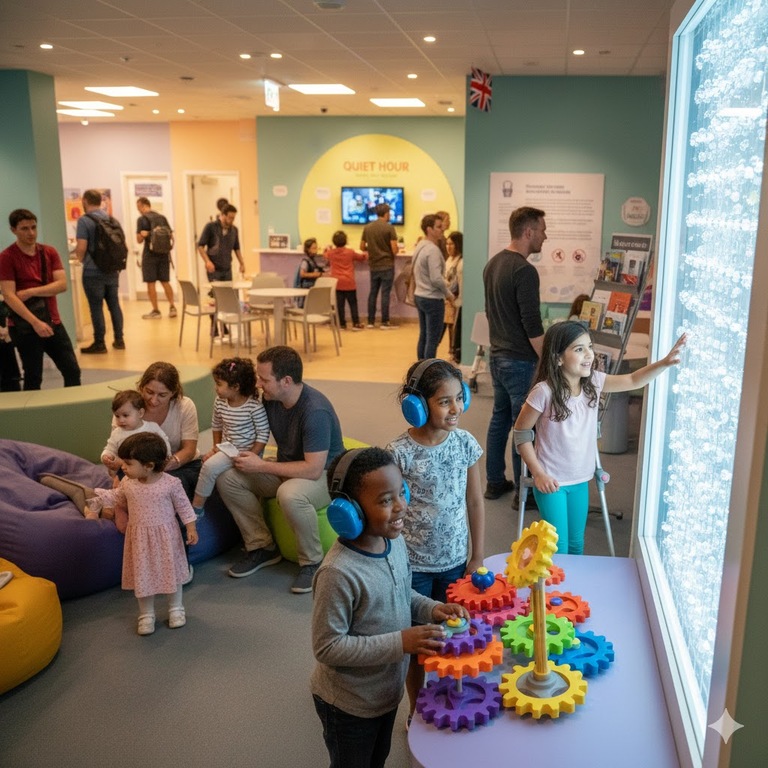
Family outings are often envisioned as carefree, joyous experiences, but for families with neurodivergent members, these excursions can present a unique and often unspoken challenge. A trip to a museum, theme park, or even a local restaurant can feel less like a simple outing and more like navigating an invisible map filled with potential sensory triggers and unpredictable stressors.
The journey is not just about reaching a destination but about managing an environment that is built for the neurotypical majority, unintentionally leading to moments of distress, discomfort, or even “meltdowns.” This report serves as a guide for understanding this invisible map and highlights the growing number of UK venues that are intentionally designing spaces where every mind, from the neurotypical to the neurodivergent, can feel not just accommodated, but truly welcome.
Planning your next family outing?
Tediverse helps you keep track of which places suit your child–logging sensory responses to different environments and building visual schedules that make outings more predictable.
✓ Free plan available • ✓ No credit card needed • ✓ Upgrade any time
Understanding the Sensory Spectrum: More Than a Buzzword
The foundation of neuro-inclusive design is an understanding of neurodiversity itself. Neurodiversity is not a diagnosis or a disorder but a term that recognises the natural, normal variation in human brains. It encompasses a wide range of cognitive, sensory, and emotional differences, including conditions like autism, ADHD, dyslexia, and Tourette’s syndrome. This perspective views these differences not as deficits to be cured but as distinct ways of perceiving and interacting with the world.
For many neurodivergent individuals, a key aspect of this difference is their unique sensory profile, which dictates how their nervous system receives, processes, and responds to information from the environment. These sensory experiences often fall into two primary categories.
Hypersensitivity and Hyposensitivity
First, there is hypersensitivity, or over-responsiveness, where a person is overwhelmed by everyday sensory input. For example, the flickering of fluorescent lights that is imperceptible to neurotypical people can be deeply distressing to a person with visual hypersensitivity, while a crowded café’s noise can be unbearable. Simple textures on clothing or strong, artificial smells can also cause significant discomfort.
Conversely, some individuals experience hyposensitivity, or under-responsiveness, where they require more intense sensory input to feel engaged and grounded. This can manifest as a higher pain threshold, a preference for intense flavours, or an affinity for activities that provide deep pressure or intense movement.
It is important to recognise that an individual’s sensory profile is not a fixed state. A person’s processing differences can be “multi-faceted and fluid,” with heightened sensitivity in some areas and reduced sensitivity in others. Furthermore, their responses can fluctuate based on factors such as stress, fatigue, or the specific environment.
Track your child’s sensory responses to different environments
Use Tediverse to document which venues work well and which trigger sensory overwhelm. Build a personalized guide to family-friendly spaces.
The Blueprint for Belonging: Principles of Neuro-Inclusive Design
True inclusion in public spaces requires moving past a basic physical accessibility checklist. While ramps and lifts are essential, they do not address the cognitive and sensory barriers that prevent many families from participating. As leading experts have noted, an inclusive event must embrace a broader perspective on cognitive and sensory diversity, moving beyond a one-dimensional view of accessibility.
The Four Pillars of a Welcoming Space
The most successful neuro-inclusive venues are built on a framework of four interconnected pillars, each addressing a key sensory or environmental need.
Pillar 1: Light and Sound
For many neurodivergent individuals, light and sound are two of the most significant sensory triggers. Environments with bright, flickering lights, chaotic visual stimuli, and loud, unpredictable noises can lead to overstimulation and distress.
- Adjustable Lighting: Offer control over the visual environment through dimmers or blackout curtains
- Sound Management: Use sound-absorbing materials and provide noise-cancelling headphones
Pillar 2: Space and Movement
Crowded spaces and the expectation of standing still in long queues can cause anxiety and restrict an individual’s natural need for movement, a common self-regulation practice known as “stimming”.
- Flexible Layouts: Create room for movement with open areas for pacing
- Seating Options: Offer variety including wobble cushions and stability balls
- Clutter Reduction: Maintain organised, clutter-free environments
Pillar 3: Scent and Atmosphere
Strong smells can be as overwhelming as loud noises. The perfumes, colognes, and scented products commonly used in public spaces can be significant sensory triggers for some individuals.
- Scent Management: Instruct attendees to refrain from strong fragrances
- Ventilation: Ensure good air circulation to manage ambient smells
Pillar 4: Proactive Communication and Predictability
Unpredictable changes and a lack of clear information are major sources of anxiety for many neurodivergent people, who often rely on predictability and structure to navigate their environment.
- Clear Information: Provide comprehensive pre-event materials well in advance
- Accessible Formats: Offer information in text, visual maps, and videos
- Sensory Maps: Create guides highlighting areas of high noise, bright light, or crowds
Keep a record of what works for your child
Use Tediverse to note which venues went well and which triggered overwhelm, so you can plan future outings around the places and conditions your child copes with best.
The Inclusive Itinerary: Curated Destinations for Diverse Families
This section highlights real-world examples of UK venues that have adopted the principles of neuro-inclusive design, offering a practical guide for families seeking welcoming spaces for their next outing.
Accessibility offerings change often–schemes are added, paused, or updated–so always check the venue’s current accessibility page before visiting to confirm exactly what’s available on the day.
Theme Parks and Major Attractions
Theme parks, with their crowds, loud music, and flashing lights, can be among the most challenging environments for neurodivergent individuals. However, a growing number of parks are implementing strategic accommodations to make them more accessible.
LEGOLAND Windsor Resort
A leader in inclusive design, LEGOLAND Windsor is home to the UK’s first “Total Sensory Space” in a theme park. Located in Heartlake City and the Resort Hotel, these spaces are designed to be calming retreats with interactive projections, vibrating bean bags, bubble tubes, soft lighting, and fibre optic features.
The park also offers a Ride Access Pass, which reduces wait times for guests who struggle with queuing.
Chessington World of Adventures and Thorpe Park
Like LEGOLAND, these major theme parks welcome autistic visitors and offer a Ride Access Pass to bypass long queues. Chessington also has designated quiet areas and provides sensory maps to help families plan their visit. Both parks provide a comprehensive accessibility guide detailing ride suitability and other accommodations.
Longleat
The safari park and estate has introduced sensory bags for visitors, available for a refundable deposit. These bags contain essential items like ear defenders, a feelings fan, and fidget toys to help visitors navigate the park comfortably. Longleat also offers a queue assist scheme and detailed accessibility information for its attractions.
Museums and Cultural Centres
Cultural institutions are often at the forefront of the movement to create inclusive environments. Many have moved beyond standard accessibility to address the specific sensory needs of their visitors.
The National Space Centre
This venue offers a variety of initiatives, including “Accessible Afternoons” specifically designed for visitors with additional needs who benefit from a quieter experience. They also use a fast-track system to help neurodivergent visitors bypass long queues and crowds, a crucial adjustment that reduces anxiety and the potential for sensory overload.
Winchester Science Centre and Planetarium
This centre has a specially designed quiet space called the “Recombobulation Room”. It also offers sensory support backpacks that include fiddle toys, ear defenders, and a social story, which can be booked in advance. The Planetarium shows are described as relaxed environments with low light and the freedom to move around.
The British Museum
A prime example of proactive communication, the British Museum provides a detailed sensory map on its website that highlights areas of high noise, bright lights, and crowds, allowing visitors to plan their route and prepare in advance.
Zoos, Nature Reserves, and Outdoor Spaces
Natural environments can be inherently calming, and many are now making intentional efforts to be more inclusive.
London Zoo
ZSL London Zoo offers a “Penguin Pass” queue hopper for visitors who find queuing difficult. They also provide downloadable visual and sensory stories to help neurodivergent visitors feel prepared. The zoo has a quiet spaces map and offers relaxed, early opening hours for those with autism.
The Eden Project
This site is committed to accessibility and has a longstanding partnership with the Sensory Trust. Staff and performers are trained in the Makaton language programme, which uses signs and symbols to aid communication. The venue provides a detailed accessibility guide, and carers can get free entry.
The National Trust
Many National Trust historical sites, gardens, and parks are well-suited for autistic visitors, offering sensory-friendly environments with open spaces for quiet exploration. They have an ongoing process of improving accessibility information on their individual web pages and many sites provide “Changing Places” facilities.
Remember what worked for next time
After each outing, note what helped and what to avoid. Over time you’ll build your own personalised guide to the places, times, and conditions where your family thrives.
The Family Playbook: Practical Tips for a Successful Outing
While a growing number of UK venues are becoming more inclusive, the responsibility of planning a successful outing still largely falls on the family. Fortunately, with thoughtful preparation and a flexible mindset, these challenges can be managed.
Before You Go: The Power of Preparation
A successful outing begins well before leaving the house. The key is to reduce the unknown variables and create a sense of predictability.
Choose Wisely: Start with locations that are familiar or those known for their commitment to neuro-inclusive practices. Consult a venue’s website for information on quiet hours, accessibility guides, and sensory maps.
Create a Visual Schedule: For children who thrive on structure, a visual schedule outlining the day’s events is an invaluable tool. This helps to manage expectations and provides a clear, predictable plan.
Call Ahead: Contact the venue directly to ask about quieter times, available resources like sensory bags, and the location of any designated quiet rooms. This proactive step can provide peace of mind and help with contingency planning.
The Sensory Survival Kit: What to Pack
Having a prepared “sensory survival kit” can make a significant difference in managing unexpected moments of overwhelm.
- Noise-cancelling headphones or earplugs: These are essential for mitigating loud or unpredictable noises.
- Fidget toys or tactile objects: These items provide a calming form of sensory input that can help with self-regulation.
- A weighted blanket or comforting object: A weighted blanket can provide deep pressure and a sense of security during moments of distress.
- Familiar Snacks and Drinks: Hunger can be a major trigger for meltdowns. Packing preferred snacks and a water bottle ensures that a small physiological need does not escalate into a larger problem.
The Art of Flexibility: On the Day of the Outing
No matter how well a plan is constructed, it is important to remember that things may not go as expected. The goal should be flexibility and focusing on the shared joy rather than a rigid adherence to the itinerary.
- Identify a Quiet Zone: Upon arrival, locate the venue’s designated quiet area. This serves as a known retreat should the need arise.
- Be Ready to Adapt: Have a plan to adjust the itinerary or leave early if a family member shows signs of distress.
- Debrief: After the outing, take time to talk as a family about what went well and what could be improved for next time. This helps build a sense of agency and positive reinforcement for future outings.
For more information about supporting neurodivergent children during family activities, check out these helpful resources:
- More Than Fidgeting: Understanding Sensory Needs in Neurodivergent Children - Learn how to support your child’s sensory regulation.
- Mealtime Meltdowns: Strategies for Parents of Neurodivergent Children - Discover strategies for managing challenging situations.
Ready to plan calmer family outings?
Join UK families using Tediverse to track sensory responses, remember which venues work, and build visual schedules that make days out more predictable. Start free today.
✓ Free plan available • ✓ No credit card needed • ✓ Upgrade any time