Managing Sensory Overload: Creating Calmer Home Environments
Parenting a neurodivergent child invites a journey of understanding their unique way of experiencing the world. Neurodiversity recognizes the natural variation in human brain function, encompassing everyone. ‘Neurotypical’ refers to common brain functions, while ‘neurodivergent’ describes those whose neurology differs, including conditions like Autism Spectrum Condition (ASC), ADHD, Sensory Processing Disorder (SPD), Dyslexia, and others. In the UK, it’s estimated that around 1 in 7 people are neurodivergent (estimates vary).
Viewing neurodivergence positively allows families to celebrate unique strengths and creativity. However, it’s vital to acknowledge the challenges neurodivergent children face in a world often designed for neurotypical individuals. This guide offers UK-focused advice for creating a supportive, sensory-friendly home.
What is Sensory Overload?
Sensory overload, or overstimulation, happens when the brain receives more sensory information–sight, sound, touch, taste, smell, movement, body position, internal cues–than it can process. This can trigger an involuntary ‘fight, flight, or freeze’ stress response. While anyone can experience it, it’s often more frequent and intense for neurodivergent individuals, especially those with Autism, ADHD, or SPD, whose brains process stimuli differently.
Why Your Home Matters
The home should be a sanctuary for a neurodivergent child–a predictable, calming place to decompress from the often demanding outside world. External environments can be sensorily taxing, leading to fatigue. A ‘safe base’ at home is crucial for emotional and physiological regulation, allowing the child’s ‘sensory cup’ to empty. Adapting the home to their unique sensory needs can reduce overload episodes, supporting well-being and family life.
Decoding Sensory Signals
Neurodivergent children often experience sensory overload due to differences in how their brains process sensory information. Sensory Processing Disorder (SPD) describes difficulties in organizing and responding to sensory input, impacting motor skills, emotional regulation, and attention. It’s worth noting that SPD is widely recognised by occupational therapists but is not a standalone diagnosis in the DSM-5, so sensory needs are often documented under a broader diagnosis such as autism.
Recognizing the Signs of Overload
Recognizing overload signs as involuntary stress responses, not misbehaviour, is key.
Meltdowns: Intense, outward expressions of overwhelm (shouting, crying, physical actions) – a ‘fight’ response.
Shutdowns: Internalised ‘freeze’ response (withdrawal, non-verbal, vacant, tired).
Anxiety and Irritability: Heightened anxiety, restlessness, agitation, mood swings.
Withdrawal and Avoidance: Trying to escape stimuli (covering ears/eyes, hiding).
Increased Stimming: Repetitive movements or sounds increase as a self-regulation strategy. Suppressing stimming can hinder regulation.
Communication Difficulties: Speech and language processing may shut down.
Physical Discomfort: Nausea, headaches, muscle tension.
Recognising early “rumble stage” signs (pacing, repetitive questioning) can help prevent escalation.
Hyper- vs. Hypo-sensitivities
Hypersensitivity (Over-responsiveness): Intense reaction to stimuli others tolerate, leading to sensory avoidance (e.g., finding typical lighting unbearable, distressed by light touch).
Hyposensitivity (Under-responsiveness): Requires more intense input to register, leading to sensory seeking (e.g., constant movement, high pain tolerance, chewing non-food items).
Most children have a mixed profile, with sensitivities fluctuating based on tiredness, illness, or stress.
Identifying Sensory Triggers in Your Home
Understanding your child’s specific sensory triggers is the first step. Observe their behaviour and reactions, noting signs of distress, avoidance, or seeking. A diary can reveal patterns across all eight sensory systems: visual, auditory, tactile, olfactory (smell), gustatory (taste), vestibular (movement), proprioceptive (body awareness), and interoceptive (internal body cues).
Common Home Sensory Triggers
Visual:
- Bright fluorescent lighting
- Cluttered spaces
- Busy patterns on walls or furnishings
- Flickering lights
- Screen glare
Auditory:
- Household appliances (washing machines, vacuum cleaners)
- Multiple sounds overlapping
- High-pitched noises
- Sudden loud sounds
- Background TV or radio
Tactile:
- Clothing textures (tags, seams), bedding, light or unexpected touch
- Food textures
- Certain furniture fabrics
- Water temperature and personal-care sensations (hair brushing, teeth cleaning)
- Air movement
Olfactory (smell):
- Strong or artificial scents (perfumes, cleaning products, air fresheners)
- Cooking smells
- Environmental odours
Gustatory (taste):
- Strong flavours and specific food textures
- Toothpaste flavour or texture
Vestibular (movement) and proprioceptive (body awareness):
- Hypersensitive children may fear movement or get car sick easily
- Hyposensitive children may constantly seek movement — rocking, spinning, crashing
Interoceptive (internal cues):
- Difficulty recognising hunger, thirst, the need for the toilet, or their own rising distress — so overload can build unnoticed
Creating Sensory-Friendly Spaces
Design Principles
- Reduce visual clutter
- Use calming colour schemes
- Ensure good lighting control
- Minimize noise transmission
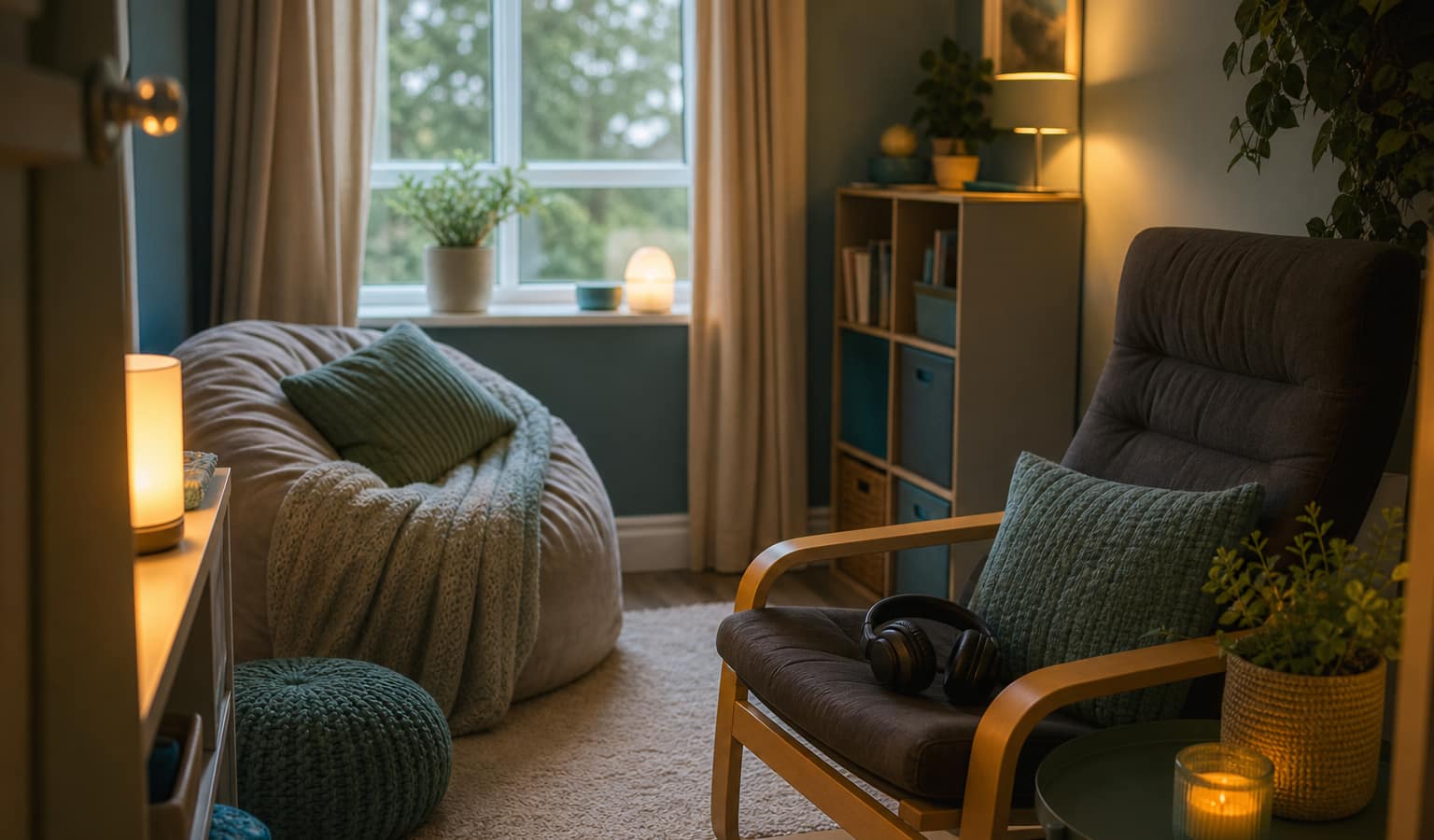
- Create quiet retreat spaces
- Provide sensory tools and equipment
Room-Specific Strategies
Bedroom: Create a calm, predictable sleep environment with sensory supports like weighted blankets, blackout curtains, and controlled lighting.
Living Room: Design quiet corners with soft furnishings, reduce visual clutter, and create movement zones for sensory seekers.
Kitchen/Dining: Minimize appliance noise, create comfortable eating spaces, and use visual timers for meal preparation.
Managing Sensory Overload in Real-Time
When Overload Occurs
- Remain calm - Your calm helps regulate your child
- Remove triggers - Reduce sensory input immediately
- Provide safe space - Allow access to a quiet, calm area
- Don’t force communication - Processing may be impaired
- Offer sensory tools - Weighted items, fidgets, headphones
- Give time - Recovery takes time
Prevention Strategies
- Maintain predictable routines
- Build in sensory breaks
- Prepare for known triggers
- Use visual schedules
- Teach self-regulation skills
- Create transition supports
How Tediverse Helps
Overload rarely comes out of nowhere — it builds as the “sensory cup” fills through the day. The trouble is that the early “rumble stage” signs are easy to miss in the moment. Tediverse helps you capture what actually happened so patterns become visible, and you can step in before things escalate rather than only picking up the pieces afterwards.
| Tediverse tool | What it captures | How it helps prevent overload |
|---|---|---|
| Episode Tracker | Overload episodes with their triggers, the early rumble-stage signs, and what finally calmed things | Reveals patterns so you can step in before overload builds, not just react to it |
| Sleep Tracker | How well your child slept and settled | Poor sleep fills the sensory cup fast — spotting tired days helps you lower demands in advance |
| Food Tracker | Hunger, oral sensory needs and mealtime stress | Removes a common, easily missed overload trigger |
| My Feelings check-ins | Your child flagging rising overwhelm in their own words | Catches overload at the rumble stage, when it's still preventable |
| Visual schedules | A predictable routine with sensory breaks built in | Predictability lowers baseline anxiety, leaving more room in the sensory cup |
| Reports & exports | A shareable summary of triggers and the strategies that work | Keeps school, family and therapists co-regulating in the same way |
Spot the triggers before overload builds
Tediverse helps you log overload episodes, track patterns across your child’s day, and see which calming strategies work, so you can prevent overwhelm rather than just react to it.
✓ Free plan available • ✓ No credit card needed • ✓ Upgrade any time